
New Zealand Hike and Explore
Price
Trip Duration
Max People
Group Type
Activity Level
Level 3-4
We rate trips on a scale from 1 (leisurely) to 5 (avid), with a range of activity levels in between.
Overview
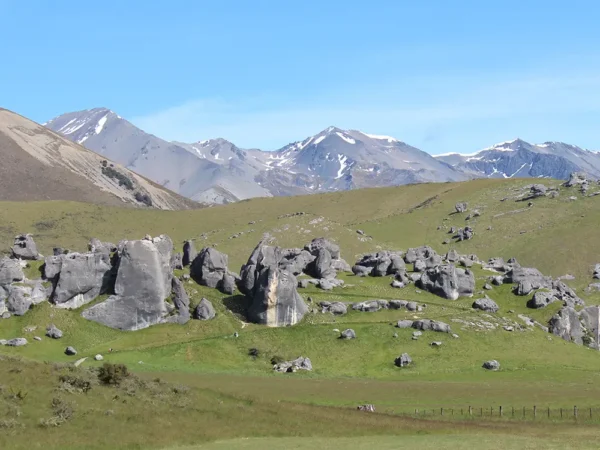
Enjoy New Zealand’s South Island, dramatic coasts, and incredible vistas in some of the country’s most breathtaking national parks. You will enjoy hiking the South Island’s West Coast with local guides and will spend your nights in comfortable lodge and cabin accommodations. Day trips include hiking and biking along glacial lakes and old-growth rainforests, kayaking in spectacular lagoons, and exploring alpine highlands. Visit golden beaches, bird sanctuaries, hidden waterfalls, and the Cloud Piercer, Aoraki/Mount Cook, the highest mountain in New Zealand. Your journey along coastal and inland trails offers an incredible variety of environments and activities.
Included/Excluded
- Skilled Outdoor Leader guides & local experts, including translation (if applicable)
- Equipment for all outdoor activities
- Delicious local cuisines
- Double-occupancy or group rooms by gender or request
- Limited single-occupancy rooms available for extra cost
- Park permits & fees
- Transportation to & from trip activities
- Transportation to and from trip start and end location (including airfare)
- Optional trip insurance
- Lodging stays before/after scheduled trip dates
- On-your-own activities, food, and shopping
- Alcoholic beverages
- Visa fees (if applicable)
Location Map
Day 1 – Christchurch to Mount Cook
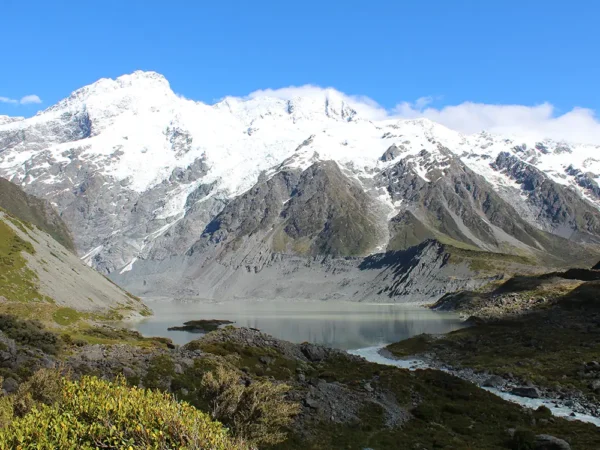
After a trip orientation from your guide we are soon heading across the Canterbury Plains toward the Southern Alps, which run the length of the South Island. We then head to Lake Tekapo for a hike along the lakeshore before emerging above the treeline on Mt. John for breathtaking views of the lake and surrounding mountains. We drive on to Mount Cook village and see the Tasman Glacier, the longest glacier in New Zealand. It is rapidly retreating and has an astonishing melted water lake at its snout. Make the most of being in this special place and wander around the glacial moraines and tarns.
Day 2 – Aoraki/Mount Cook National Park
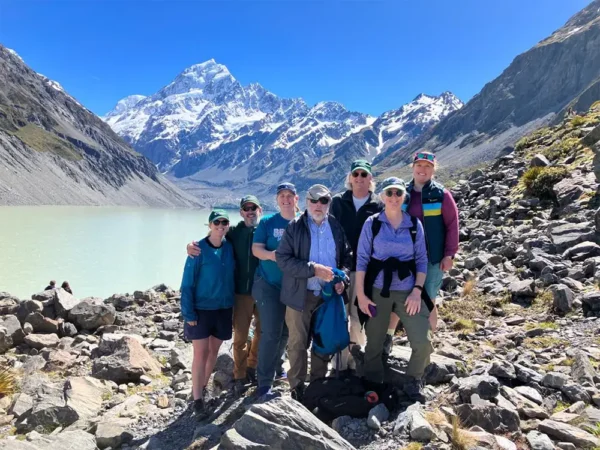
We set off with daypacks to hike up to Sealy Tarns. There are impressive views across the Hooker and Mueller glaciers to the Mount Sefton icefall and Aoraki/Mount Cook. On this walk you can see the forces of nature at work – huge moraines deposited over thousands of years by glaciers, and more recently avalanches and rocks that tumble down distant mountain faces. There is time in the afternoon to either hike up the Hooker Valley or relax in the village and visit the Sir Edmund Hillary Alpine Centre. This is a great place to be inspired by the courageous stories of pioneering mountaineers and to learn about the park’s natural history. If you are lucky, you will see the summit of Aoraki/Mount Cook turn from white to pink as it catches the last of the sun’s rays.
Day 3 – Mount Cook National Park/Wānaka
This morning has two hike options. For the more demanding option, hike up the steps to the Red Tarns, named for the red pondweed that grows in them. These tarns nestled beneath Mt. Sebastopol offer stunning views across to Aoraki and the Hooker glacier. For an easier option, the gentler Governors Bush awaits you. After the hikes, we depart Aoraki Mount Cook Village and drive through the Mackenzie Country crossing Lindis Pass into the Central Otago High Country. Our final destination for the day is the lakeside resort town of Wānaka. There’s time for a hike along the lakeshore in the afternoon, a great way to soak up the majestic mountain views.
Day 4 – Wānaka to Mt Aspiring National Park to Queenstown
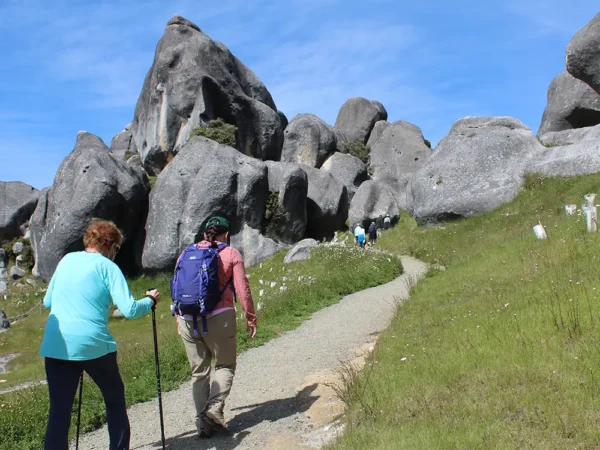
This morning’s hike leads us toward the peaks of Aspiring National Park. We hike in the lower Matukituki Valley on the Diamond Lake walk and on up Rocky Mountain, a distinctive glacially sculpted “roche moutonnee” (rock sheep) for spectacular views over the lake, and to the Southern Alps and Mount Aspiring/Tititea. There are several options with today’s hike ranging from 1 hour to 3 hours in duration. After the hike we drive over the Crown Range and descend into the Wakatipu Basin and drive around the lakeshore to the vibrant resort town of Queenstown.
Day 5 – Queenstown
Free day in Queenstown – New Zealand’s famous alpine resort town. Choose from a range of adventure activities or just relax and enjoy the vibe of this fun town. You may want to visit Milford Sound today. Milford Sound is accessible by coach or plane. Your guide will talk you through the different options for this incredible day trip. There are 3 departure times for the fly-cruise-fly options.
Day 6 – Depart for Franz Josef
Leave the Patagonian-like landscape of Central Otago to the contrasted lush rainforests of the West Coast. Our drive takes us through the Kawarau Valley, also known as the “Valley of the Vines” after all the vineyards in the area, before following the shores of lakes Wānaka and Hawea before crossing the Southern Alps at Haast Pass. Soak up the scenery of the pristine wilderness of South Westland. We stop for a short walk at Ship Creek and walk on a boardwalk over a swamp beneath a canopy of giant Kahikatea trees. From the beach you may see the rare and endangered Hector’s dolphin playing in the surf. The West Coast of the South Island is one of the few places in the world where you will find a glacier descending into rainforest, and we will take a short drive up the Waiho Valley to get a closer view of the Franz Josef glacier. This glacier descends from a height of 2700 metres to 500 metres above sea level in just 9kms. We stay in the nearby village of Franz Josef, nestled below the breathtaking panorama of towering mountains, magnificent glaciers and lush forests.
Day 7 – Kayaking on the Ōkarito Lagoon
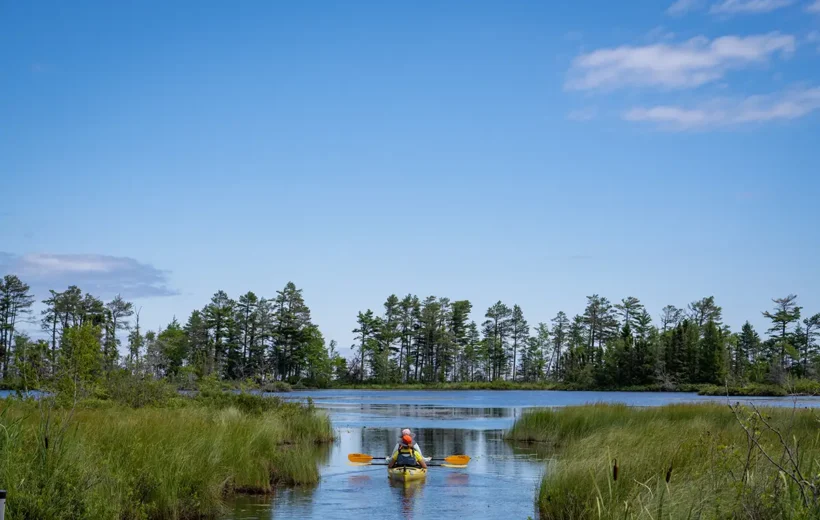
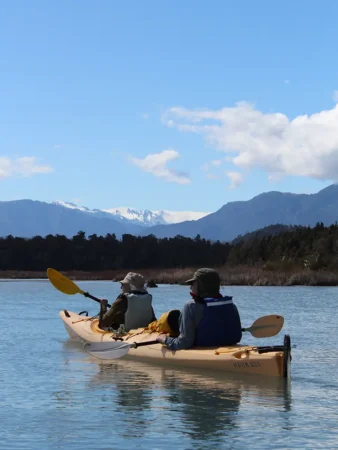
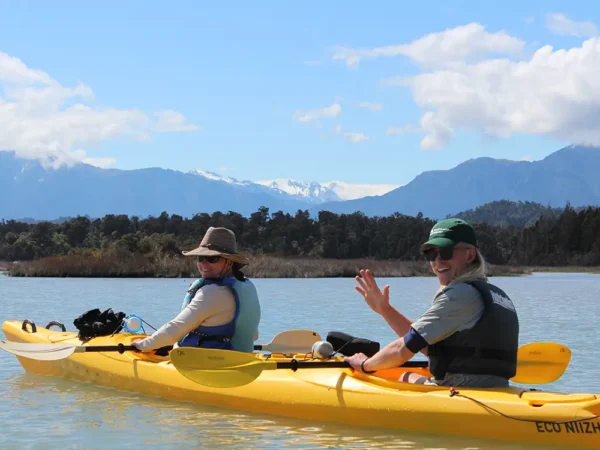
This morning, we visit the tiny coastal village of Ōkarito and take a guided kayaking trip across Ōkarito Lagoon into virgin rainforest. This lagoon is New Zealand’s largest unmodified wetland and home to huge variety of migratory birds, including the kotuku (white heron). After lunch we hike along this wild, windswept, and driftwood-strewn beach and up to a trig point for panoramic views of the Southern Alps. Spend a second night in Franz Josef.
Day 8 – Franz Josef to Punakaiki
We drive to the historic and quaint town of Hokitika this morning and get fitted out with e-bikes and set off for a ride on the stunning West Coast Cycle Trail. The trail meanders its way along the historic Kaniere Water Races (hand-dug in 1875) towards Lake Kaniere. At 8km long and 195m deep, Lake Kaniere is home to towering kahikatea trees and a stack of cheeky birdlife. Head back the way you came, grab a coffee, and have a wander around the streets of Hokitika before we follow the coastal highway to Paparoa National Park and the village of Punakaiki.
Day 9 – Punakaiki
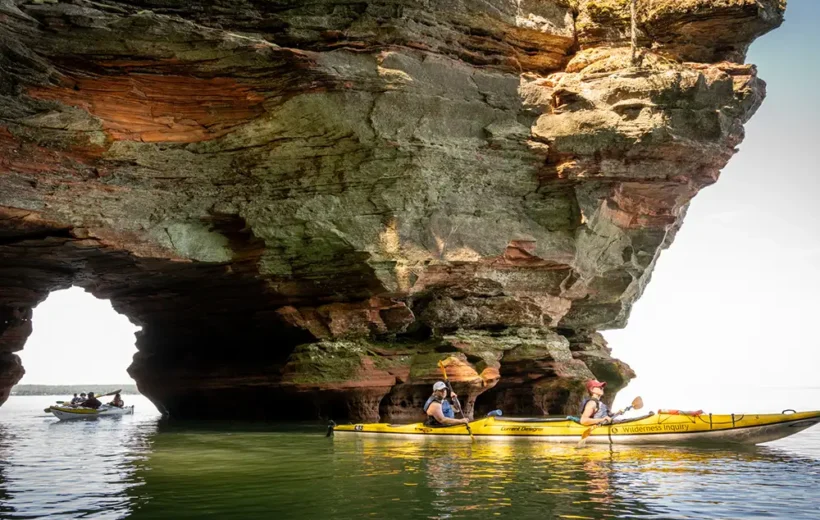
A whole day to hike and explore Paparoa National Park. We hike the Pororari River track which passes through groves of Nikau palms as it winds its way up this spectacular limestone canyon. There are great opportunities to swim in the beautiful deep pools of the Pororari River. Pack your bathing suit! The trail then climbs gently up and over into the Punakaiki Valley where we meet the vehicle, it is just a short drive back to our accommodation from here. There is the option of a hike to Cave Creek in the afternoon, a river resurgence surrounded in primeval rainforest. Alternatively, you may want to enjoy a relaxing afternoon at the accommodation, fossicking on the beach and watching the thumping waves crash ashore. Before dinner at our holiday home, we head down the Truman Track through glades of Nikau palm and swathes of harakeke (native flax) to a headland. Tides permitting, explore coastal sea caves that were used as shelter by early Māori while collecting the abundant seafood found in this area.
Day 10 – Punakaiki to Arthur’s Pass to Christchurch
We start our last day together with a visit to the Pancake Rocks. These 30 million-year-old limestone rocks have formed into what look like immense layers of pancakes. When the tide is high, or the weather is rough, water surges into caverns below the rocks and squirts through mighty blowholes, bearing a great resemblance to natural geysers. We then head east along this engineering marvel of a road as it ascends the rainforests of the West Coast region into the alpine zone to Arthur’s Pass National Park, stopping for a short hike to the Punch Bowl Falls before continuing. Bid your guide farewell in Christchurch at the end of a fantastic journey.
Our Approach to Accessibility
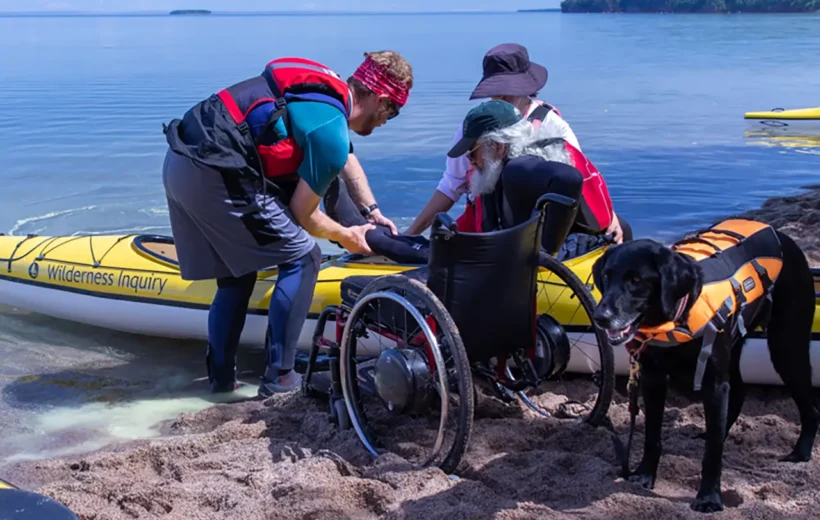
Wilderness Inquiry takes a creative and multifaceted approach to accessibility on trips and programs. Understandably, an ADA-level accessibility may not always be available in wilderness and even international settings. That is why we utilize Wilderness Inquiry’s Universal Program Participation Model (UPPM) to guide our approach to accessibility by leveraging key resources such as adaptive equipment, support personnel, itinerary and activity choices, and weighing in unique environmental factors to create experiences that can be accessible to many individuals. While our trips may not follow a one-size-fits-all approach, our team does its best to ensure a variety of travel and program options that offer differing levels of accessibility for a variety of needs and abilities. If you have questions about your ability to participate on a Wilderness Inquiry trip or program, our team is always willing to explore options and solutions that suit a traveler’s interest and ability – don’t hesitate to reach out!
What is included in the trip price?
Trip fees cover all of your needs while you are traveling with us — including equipment, food, guides, permits, etc. You are responsible for bringing personal clothing and hygiene supplies. Gear such as sleeping bags, pads, and cots can be checked out during the booking process for no additional fee.
Could the itinerary change after I sign up?
Your trip is dependent on weather, availability, and potential other unforeseen circumstances. All itineraries online are “sample” itineraries that are subject to change. Please check your confirmation packet for the most up-to-date information.
There are many different route choices available within our trip locations for hiking and paddling. The routes will be chosen by Wilderness Inquiry Outdoor Leaders based on availability and the strength of the group.
What type of food will I eat during the trip?
Typical menus for overnight camping trips include pesto pasta, burritos, stir-fry, avocado caprese wraps, brats and burgers, apple cobbler, and plenty of snacks. The exact menus vary trip-by-trip. On longer wilderness expeditions, we bring more nonperishable foods that keep well for days without refrigeration. On international trips, we tend to eat the local cuisine. We can accommodate most dietary restrictions and preferences — please note this information on your registration form.
I or a member of my family has a disability. Can I/they still participate?
We strive to put accessibility at the forefront of our programs so that individuals of all abilities, including people with disabilities, can successfully participate in our trips. If you or a member of your family has a disability, you will have an opportunity to confidentially share more during the registration process for your trip. A member of our team will connect with you further over the phone to make sure we are able to provide the appropriate support or accommodations you need to have a safe and rewarding experience on your trip.
What is your cancellation policy?
Trip deposits are due at the time of booking and are generally non-refundable.
- Within five weeks prior to trip departure (0-34 days):
- You are responsible for 100% of trip fees. No refunds issued.
- Five to ten weeks prior to trip departure (35-70 days):
- We will refund up to 50% of your trip fee, minus your deposit.
- Ten weeks or more prior to trip departure (71+ days):
- We will issue a refund of all trip fees paid, minus your deposit.
- The deposit may be credited to a future trip.
To view our full cancellation policy, please click here.