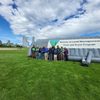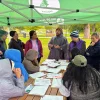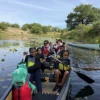
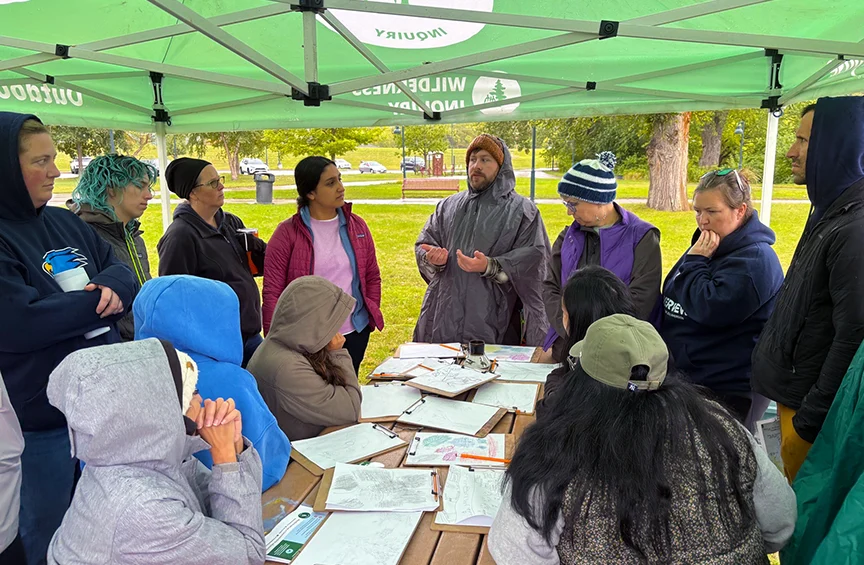
On a cool and cloudy autumn day in mid-September, 15 teachers from Riverview Elementary School (Saint Paul Public Schools) traded their classrooms for the banks of the Mississippi River. Principal Stivaliss Licona-Gervich organized a private Teacher Professional Development Outdoor Activities Day at Harriet Island Park in St. Paul, MN. The day gave school staff a firsthand look at place-based outdoor education in action, and how Wilderness Inquiry builds those methods into its Canoemobile programming.
The day was structured around four hands-on stations. Each one offered a different way of teaching outside: water quality testing, a fur trade activity, a plant life cycle game, and nature journaling. Teachers moved through each station the same way their students would. They tested river samples, tracked a plant’s growth, sketched what they noticed in a journal, and stepped into history along the riverbank.
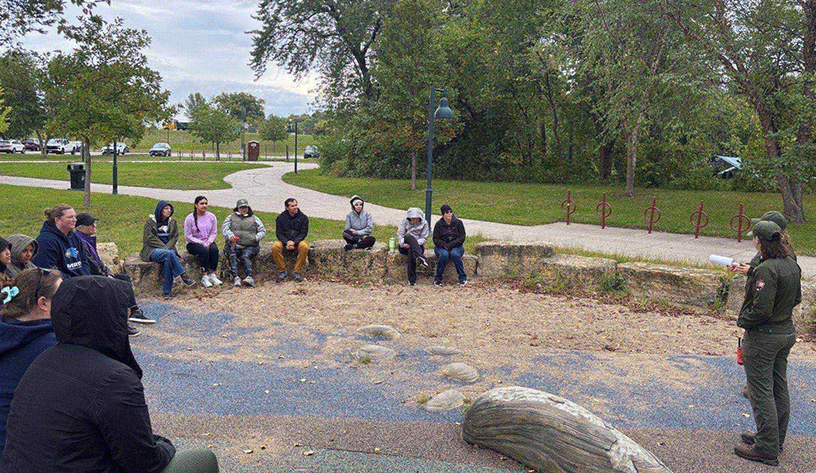
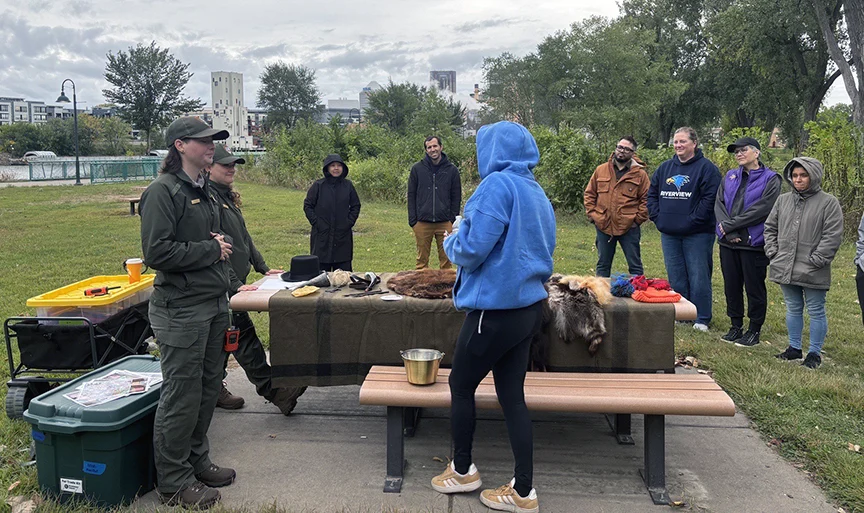
National Park Service rangers joined to lead the fur trade station. They tied the activity directly to Minnesota State Standards, touching on Minnesota culture, cost-benefit analyses, and historical perspective. This gave teachers a clear example: an outdoor activity can carry real academic weight. It’s not just a break from the classroom. It’s a different way to teach.
At the water quality station, Wilderness Inquiry Outdoor Leaders did something a little different than on a typical Canoemobile outing. They paused the activity to explain their own thinking. For example, they described how observation and the scientific method get built into something as simple as dipping a test kit into the river.
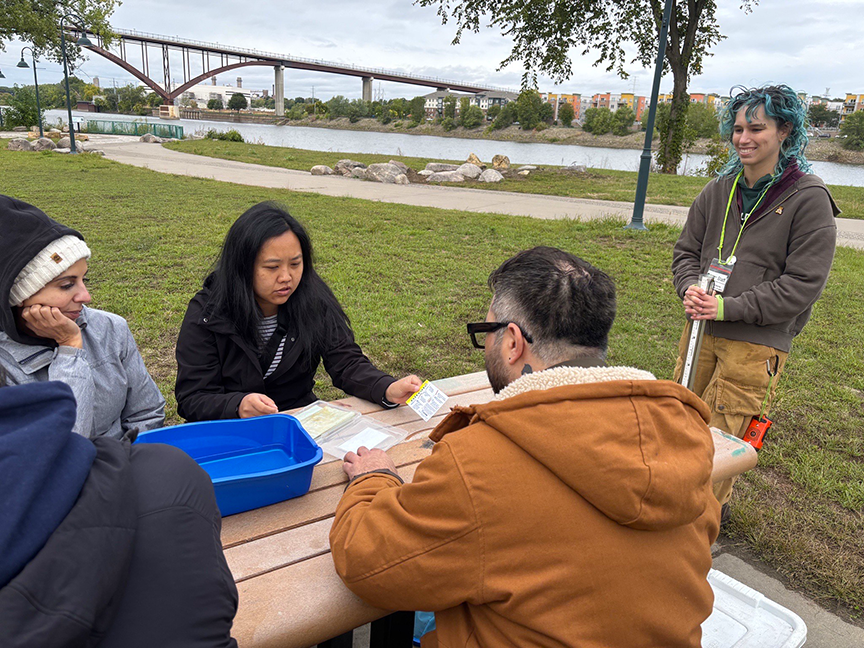
That kind of openness ran through the whole day. At every station, Outdoor Leaders explained why an activity is led a certain way, and what it’s quietly teaching. Teachers weren’t just taking part. They were watching the design choices happen in real time.
That approach led to what may have been the most valuable part of the day: a direct conversation about bringing these techniques into the classroom with the resources teachers already have. For Riverview Elementary, that question has an easy answer. Harriet Island is walkable from the school. Principal Licona-Gervich has encouraged teachers to think about walking field trips to the park as a regular part of their curriculum, not just an occasional outing.
This program was supported in part by funding from the Minnesota Legislative-Citizen Commission on Minnesota Resources (LCCMR), part of Wilderness Inquiry’s broader effort to make outdoor and place-based learning accessible to more schools and classrooms.
For schools wondering what a day like this could look like for their own teachers, the first step is simple: reach out to canoemobile@wildernessinquiry.org to start the conversation.
In Their Words: Teachers on the Power of Outdoor Learning
“All the knowledge from the leaders this day really stuck with me. I have already talked about the Mississippi water shed with my students and we have been outside twice to draw!”
“Thank you for putting together a thoughtful experience for us! Just thinking about how we can quickly head outside to complete a task we do in the classroom was something that was refreshing to hear. Plus, you are all so knowledgeable and thoughtful with your work… it was a great day!”
photos and information about the trip courtesy of Shelby Swan