By Erika Rivers, Executive Director, Wilderness Inquiry
When I think about the future of our public lands and waters, my focus has shifted. I spend less time on high‑level policies and plans, and more time on the generations of conservationists who will follow mine. I picture a middle schooler’s first time dipping a paddle into a river they’ve walked, biked, or ridden past their whole life and never really seen. I remember an aunt sharing the brilliance of a night sky full of thousands of stars with an awestruck child. I reflect on campfire conversations with my own children as they shared their sense of helplessness at influencing change in a global environment that seems to be racing in the wrong direction.
Today’s young people are growing up in a very different reality than previous generations. Climate change, declining water quality, loss of habitat and wildlife, and smoke‑filled skies from wildfires in Minnesota and Canada are not occasional news items for Gen Z and Gen Alpha—they are part of the backdrop of their lives.
As we work and share outdoor adventures with them, it is clear that many care deeply about these issues. They also see time in nature as essential to their health and wellbeing.
Outdoor time is not a nice-to-have enrichment activity. It’s a foundation for conservation-minded citizenship, and an antidote to the anxiety and distance these generations feel from the natural world.
At Wilderness Inquiry, we believe that if we want a next generation prepared to care for rivers, lakes, forests, and ecosystems, we have to start by helping them build a personal relationship with the natural world—progressively, with support, and with intention.
At Wilderness Inquiry, we believe that if we want a next generation prepared to care for rivers, lakes, forests, and ecosystems, we have to start by helping them build a personal relationship with the natural world—progressively, with support, and with intention.
The Stakes for Youth Are Higher Than Ever
Screens and busy schedules fill most hours of a young person’s day. Organized activities, homework, and digital culture are often layered on top of neighborhoods with limited natural habitat—manicured lawns, sports fields, paved schoolyards, and few mature trees, bubbling streams, or wild edges to explore.
At the same time, young people see headlines about floods, droughts, and wildfires. They live with smoke‑hazed skylines, algal blooms on lakes, and hotter summers that often force them indoors for large parts of the day. For many, these stories are local: contamination of a river they know, seeing fewer butterflies in their neighborhoods, a summer activity cancelled by poor air quality or extreme heat.
That combination—less frequent direct contact with nature and more frequent exposure to environmental risk—creates a perfect storm:
- A strong sense that something is wrong
- Fewer chances to experience what is still right, resilient, and worth protecting
- Limited understanding of how their actions, individually and collectively, can make a difference
For funders, agencies, and youth-serving organizations, this is a pivotal moment. The question is not whether young people will hear about climate and conservation challenges. They already do. The question is whether they will also have real experiences in nature that build understanding, love, and a sense that they can help change the future.
The question is whether they will also have real experiences in nature that build understanding, love, and a sense that they can help change the future.
What Happens When Youth Get Outside, Together
When youth step into a Wilderness Inquiry canoe or onto a trail with one of our Outdoor Leaders—whether through Canoemobile, near‑nature programs, or extended overnight adventures—a few consistent things happen.
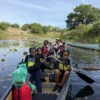
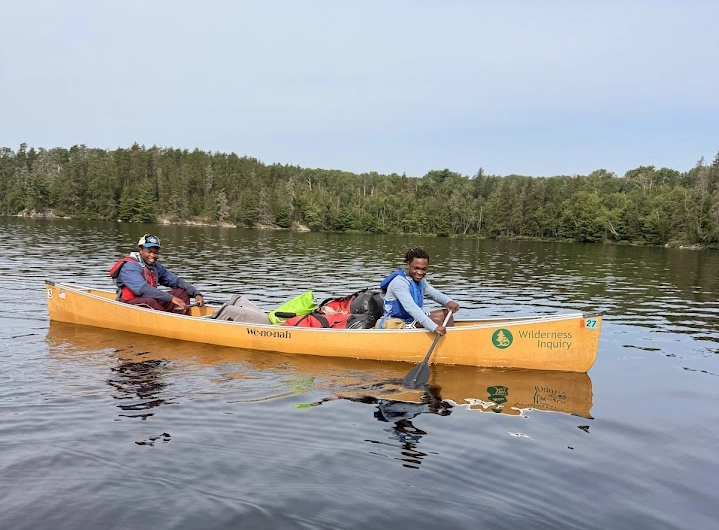
First, they experience their local environment as something alive and specific, not just a backdrop. On a Canoemobile day, students may test water quality, learn about the history and ecology of the river, and then feel the weight of the paddle and the movement of the canoe under them. That combination of hands‑on activity, context, and shared effort turns “that river by the highway” into our river.
During a fall Canoemobile program for new North High School freshmen at Theodore Wirth Regional Park in Minneapolis a couple of years ago, I watched a small group of students measure nutrients and water temperature of Wirth Lake, and use that information to try to predict what species of fish were in the lake. Toward the end of the small-group session, as the students were concluding that bluegill were likely, given the data they had assembled, a fellow student from a different small group bounded up, enthusiastically proclaiming that she had caught her first fish! She exclaimed, “How’d you know?,” when the group held up a picture of the fish she had just caught: yes, a bluegill. That moment—linking water quality science to a joyful experience, and to the broader story of ecosystem health and human impacts—came not from a slide deck, but from those students experiencing the park in a deeper way than they ever had before.
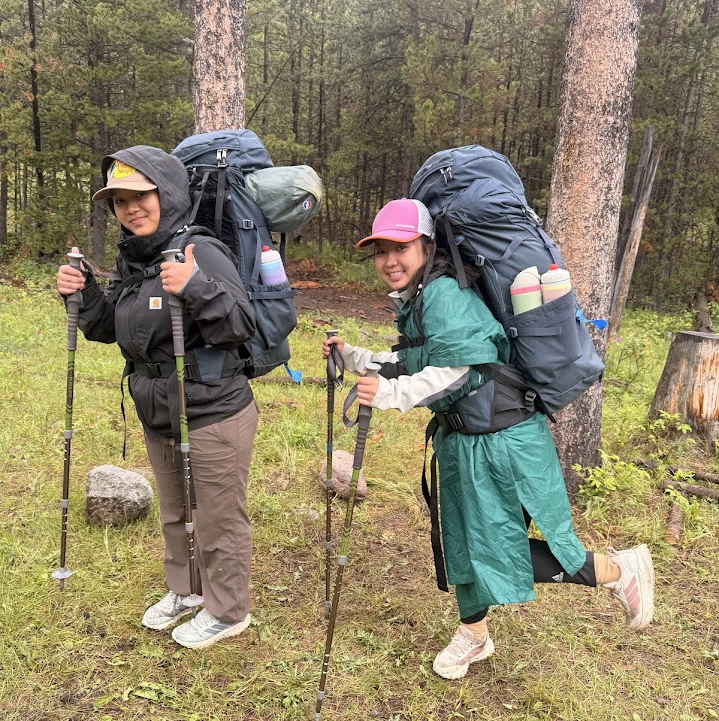
Second, they build confidence in their own bodies and abilities. Many of the young people we serve have never been in a canoe, slept in a tent, or walked a trail outside of a city park. They arrive wondering if they’ll be safe, if they’ll fit in, or if the outdoors is “for them.” By the end of the day or overnight trip, they’re the ones calling the paddle stroke, helping a friend start a campfire, spotting a wild animal with its natural camouflage, cooking a shared meal over a campstove, or navigating with a map and compass to the next portage on a wilderness lake.
Many young people begin their experiences with Wilderness Inquiry reading from unhelpful mental scripts, telling themselves that canoeing is not something they can or should do. “I don’t know how,” becomes, “Maybe I will try if my friends do,” then, “I did it!,” and finally, “If I can do this, what else can I do that I’ve been telling myself I can’t?”
A poignant example in my mind, is a rising college sophomore, a non-swimmer, who didn’t think he would be able to snorkel during an organized trip with Wilderness Inquiry to the national parks and cultural sites of the Big Island of Hawaii with a cohort of first-generation college students. His friends took it upon themselves, under the watchful eyes of Wilderness Inquiry Outdoor Leaders, to help him learn some rudimentary swimming strokes in a quiet bay near their lodgings, and joined him in wearing life jackets for the snorkeling excursion the next morning. Swimming with sea turtles that day prompted one student to go online that evening to register for a swimming class the next semester, and another to join our team for several years of guiding with Wilderness Inquiry.
“I don’t know how,” becomes, “Maybe I will try if my friends do,” then, “I did it!,” and finally, “If I can do this, what else can I do that I’ve been telling myself I can’t?”
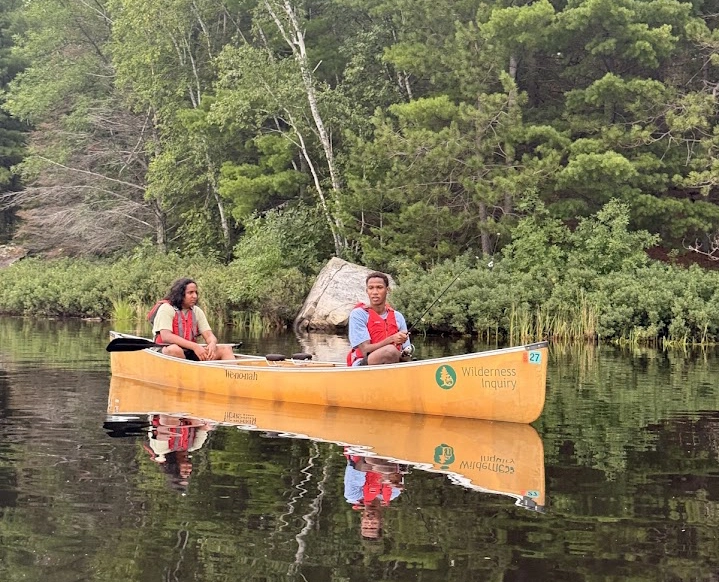
Third, they experience inclusion and belonging in a setting where that hasn’t always been guaranteed. Our trips are designed from the start for mixed-ability, mixed-age groups: youth experiencing disability, multilingual learners, students from different neighborhoods, and caring adults and kin. When everyone can participate meaningfully—not just “tag along”—young people see a model of community that many have not experienced elsewhere.
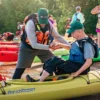
One of our staff mantras for our Canoemobile programs is, “Nobody left along the shoreline.” Long before buses arrive at a local park or water access site, our team members consult with the school or youth-serving organization to ensure we have the right supports in place so everyone can enjoy time floating on the water—some additional student support, a piece of adaptive equipment, or an alternative approach to the curriculum that supports the needs of a neurodiverse group of students. The same philosophy of equitable participation has been at the heart of our extended overnight adventures since our founding in 1978.
Our extended-trip Outdoor Leaders routinely use the philosophy of “challenge by choice” with first-time sea kayakers at our Apostle Islands National Lakeshore base camp facility. We start these four-day adventures practicing tipping our kayaks in a shallow bay so participants can overcome the most basic fear of kayaking: tipping the boat. On a multi-generational women’s yoga trip, I watched as one reluctant paddler after another conquered this fear and emerged triumphant from the water to the cheers and encouragement of 10 other women—the youngest 18 years old and the oldest in her mid-70s. The community created during this challenge brought women of a wide variety of backgrounds together, complementing and building on one another’s unique appreciation of the natural settings. These shared experiences ranged from a love of foraging, to sound-bathing in Lake Superior’s rhythmic waves, to sharing knowledge of the birds of the area.
Those three elements—immersion, capability, and belonging—are the building blocks of a conservation ethic that lasts.
Those three elements—immersion, capability, and belonging—are the building blocks of a conservation ethic that lasts.
From Backyard to Backcountry, Not a One‑Time Trip
One of the most important lessons we’ve learned is that a single great day outside can be transformational for a young person. But to build on those early sparks—to help them rethink their place and role in the natural world—takes time and repeated exposure to many kinds of natural places.
We think of that progression to the next, deeper level of love and understanding in terms of our progression from Backyard to Backcountry:
- On‑the‑water and on‑the‑trail days broaden our participants’ mental maps of their watershed and region. Youth see how neighborhood green spaces, forested areas, and rivers connect.
- Near‑nature overnight experiences close to home introduce youth and families to nearby parks with overnight opportunities. These first experiences make nature feel accessible and outdoor skill acquisition possible.
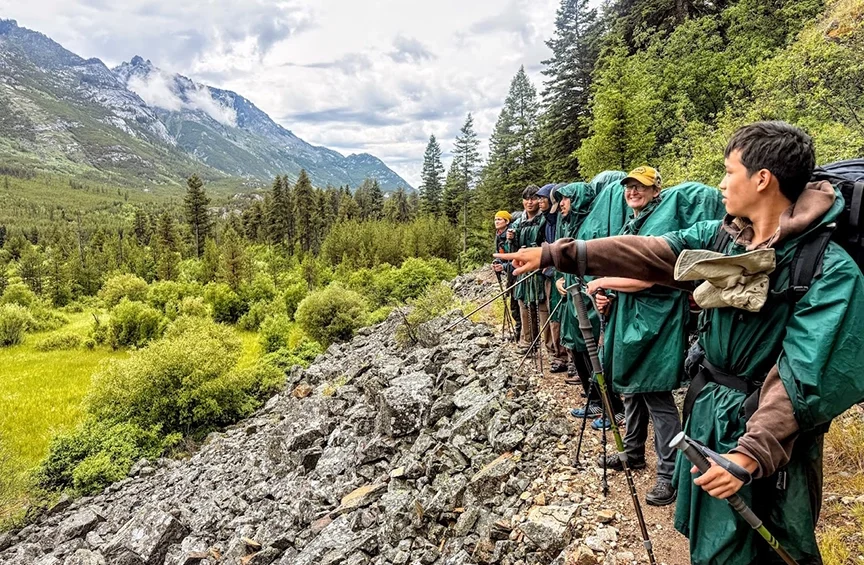
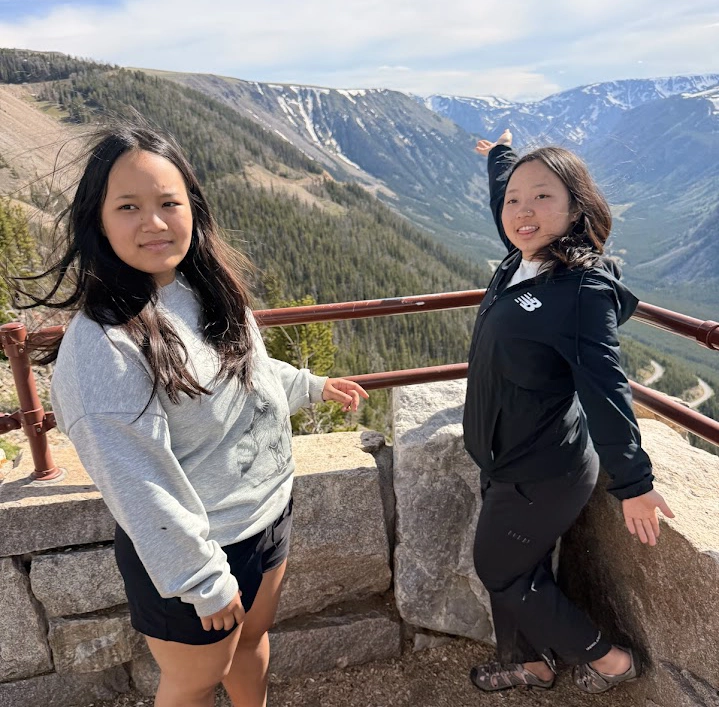
- Extended overnight adventures deepen skills, relationships, and reflection. Multi‑day trips in wild, diverse landscapes allow participants to see intact habitats, experience night skies, and observe the biodiversity that can’t thrive in managed environments.
Progression matters. We can teach about watersheds and climate in urban classrooms—and we should. But paddling through a chain of lakes, seeing how a creek joins a river, or waking up to the sound of birds in a healthy forest system allows young people to feel how everything is connected.
That embodied understanding is what turns concern into commitment.
From “That Was Fun” to “This Matters”
It can be tempting to think of outdoor programming as “fun days outside.” Joy absolutely matters; it is often the first open door to deeper learning. But if we stop at fun, we miss the deeper impact.
A young person who has paddled their local river is more likely to pay attention when that river shows up in a news story about water quality or flooding. A teen who has watched a heron hunt along a restored shoreline will remember that sight when they hear about habitat loss. A family that has spent a couple of nights under clear, star‑filled skies may think differently about air quality and energy choices back home.
At Wilderness Inquiry, our programs are built to move young people and families along this Backyard‑to‑Backcountry path:
- From a first experience close to home
- To repeated, progressively deeper experiences in more diverse and complex natural settings
- Supported by curricula that connect what they see and feel to science, community, and action
We often say we are turning “someday” into “we did it”:
- “Someday I’ll see a place like that” becomes
“We camped there together this weekend.” - “Someday I’ll get out of the city on a canoe trip” becomes
“We paddled our river through the city and it was better than I expected.” - “Someday I might do something to help” becomes
“I can speak for this place because I know it personally.”
Those are more than fun trip memories. They are identity shifts—and they are essential if we want young people to move from concern to stewardship.
What we’re seeing in participants backs this up. Each year, thousands of youth and family members join Wilderness Inquiry programs and adventures. Again and again, participants report feeling more comfortable outside, more curious about local ecosystems, and more confident in their ability to make a difference. Teachers and youth leaders tell us that students who are often quiet in the classroom tend to speak up on the trail. Families share stories of neighborhood clean‑ups, pollinator and rain garden plantings, and new park visits that were inspired by a shared experience in the outdoors together. These are small steps individually—but together, they are the early signs of a conservation ethic taking hold.
Those are more than fun trip memories. They are identity shifts—and they are essential if we want young people to move from concern to stewardship.
Why Families and Caring Adults Matter
Even powerful experiences can fade without support.
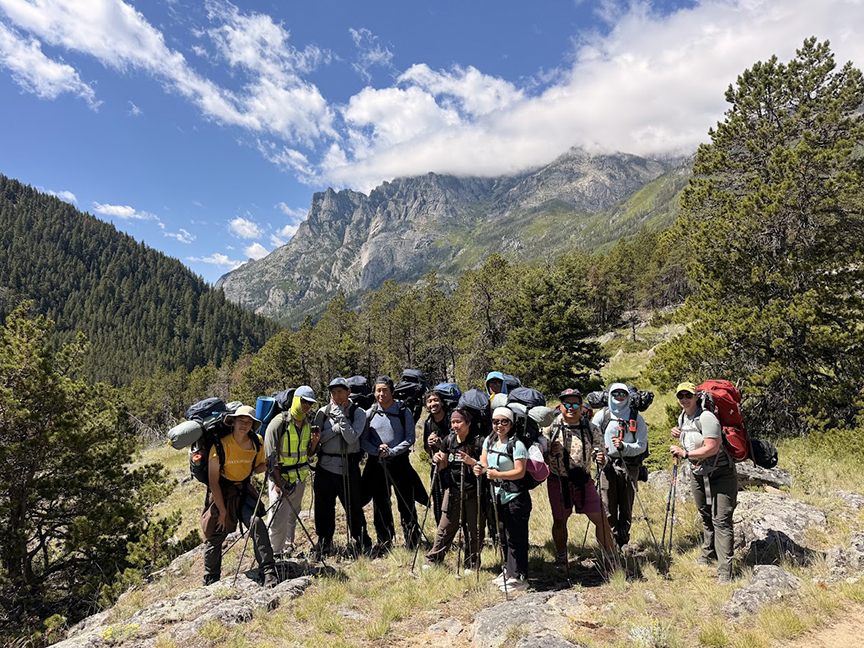
In an increasingly urban, digital world, young people need the encouragement and companionship of family, kin, and caring adults to keep exploring. That’s why Wilderness Inquiry doesn’t just serve youth in isolation. Many of our near‑nature and extended overnight adventures are designed so that caregivers, grandparents, siblings, and mentors can participate alongside them.
When families and kin experience the natural world together, several things happen:
- Curiosity becomes shared: “Did you see that turtle?” “Why is the water clearer here?”
- Conservation becomes communal: conversations emerge about recycling, native plants, energy use, and supporting local parks and green spaces.
- Support becomes stronger: when a young person wants to return to a park, join a stewardship project, or pursue further environmental learning, there is a network of adults who understand why.
This kind of support across generations is especially important for the youth we serve—many of whom face financial, social, physical, or geographic barriers to getting outside into natural settings. It helps ensure that a single experience becomes part of an ongoing relationship with the outdoors.
Equity and Access Are Conservation Issues
If we care about the future of conservation, we have to care about who gets invited into the story and who gets activated to help.
For too long, outdoor experiences—and the pathways into conservation careers and leadership—have been easier to access for some communities than for others. Under‑resourced youth, youth experiencing disability, and communities underrepresented in the outdoors have faced more barriers: cost, transportation, lack of nearby biodiverse green spaces, and a pervasive sense that “this is not for me.”
When communities are excluded from nature‑based experiences, their voices are missing from decisions about land use, water quality improvement, climate resilience, and habitat protection.
As a nonprofit, Wilderness Inquiry exists to help change that. Our youth and family programs are designed to open the outdoors to those who face the highest barriers—financial, physical, social, and psychological. We partner with schools, government agencies, youth‑serving organizations, community groups, and individual, corporate, and foundation funders to:
- Bring high‑quality, inclusive programming to local rivers, parks, and neighborhood green spaces
- Provide extended overnight adventures that deepen connection, skills, and confidence
- Integrate curricula that build understanding of ecological systems
When those young people grow up to volunteer, lead, and work in their communities, they carry their lived experiences with them. Conservation becomes less about protecting an abstract “out there” and more about caring for the rivers, lakes, and wild places that helped shape who they are.
If we care about the future of conservation, we have to care about who gets invited into the story and who gets activated to help.
What You Can Do
Helping build the next generation of conservation‑minded citizens is practical work. It starts with simple, shared experiences outside.
If you’re a foundation, corporate, or individual donor, your support puts paddles in hands, boots on the ground, and campfires in the memories of thousands of young people and families each year.
If you’re a government or youth‑serving partner, we’d welcome a conversation about how nature‑based experiences can fit alongside the work you already do—with clear learning outcomes and support for families and kin as co‑learners.
If you’re a community member or caregiver, you can lift up outdoor experiences as a core part of youth development and help ensure that under‑resourced youth and youth experiencing disability have real access, not just a spot on the sidelines.
We’re asking a lot of these next generations. They did not create the challenges we face today, but they will live with the consequences—and the opportunities—for decades to come. Our work ensures they have places, people, and experiences that engage them with what we are all working to protect:
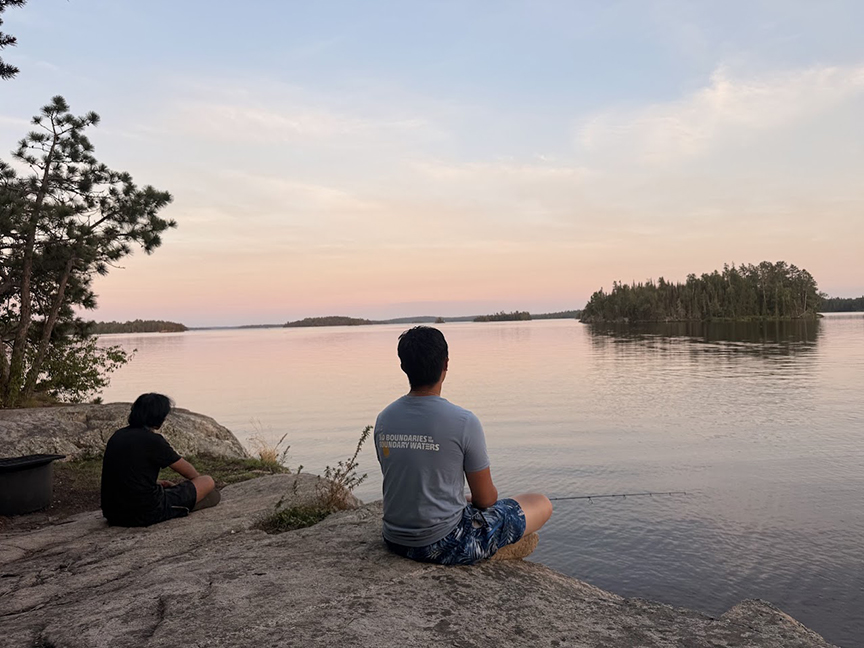
- A quiet morning on a river that has carried stories for centuries.
- A night sky bright enough to make a phone screen seem dim.
- A circle around a campfire where every voice, every body, every background has a place.
At Wilderness Inquiry, we are committed to building those purposeful experiences for youth and families across our communities. We invite you to be part of this important work.
Erika Rivers is the Executive Director of Wilderness Inquiry and holds a PhD in Conservation Biology. Her 30-year career in natural resources and outdoor recreation has focused on connecting people to natural places to advance conservation outcomes.
Photos: Sinthang Has